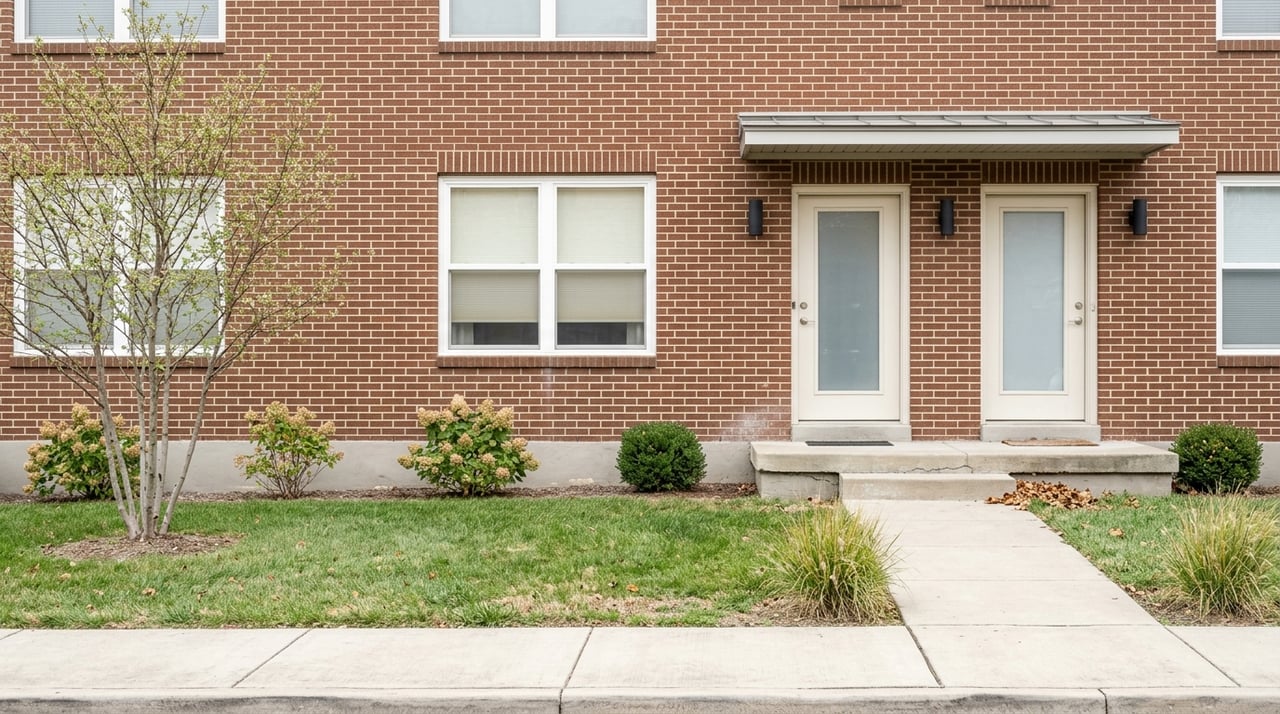
If you have been thinking about buying your first rental property, a small multifamily in Kankakee may feel like a practical place to start. Duplexes, triplexes, and four-unit properties can offer rental income, a smaller entry point than larger apartment buildings, and a chance to learn the business one step at a time. If you want a clearer picture of what to look for, what to budget for, and what can affect cash flow locally, this guide will help you get grounded. Let’s dive in.
Why Kankakee gets investor attention
Kankakee gives many first-time investors a different price point than larger nearby markets. Census data shows a median owner-occupied housing value of $104,900 in the city, and Redfin reported a median sale price of $134,930 in April 2026. That lower basis can make small multifamily investing feel more approachable if you are trying to buy your first income property.
The rental side of the market also looks tight based on local reports. A 2025 Kankakee County residential analysis says there are more than 12,000 renter households countywide, no large-scale market-rate apartment developments in more than 30 years, and demand for 215 rental units per year through 2029. A separate metro report showed multifamily vacancy at 2.7% in Q2 2024.
That said, it is important to keep the numbers in context. These figures come from different geographies and property types, including city, county, metro, and selected older-stock apartment samples. The best way to use them is as direction, not as interchangeable apples-to-apples comparisons.
What counts as a small multifamily
For most first-time investors, small multifamily means a duplex, triplex, or four-unit building. These properties are often attractive because they can spread your risk across more than one unit while still being manageable for a new owner. If one unit is vacant, the others may still produce income.
They can also work for buyers who want to live in one unit and rent the others, depending on financing and lender guidelines. The key is to understand the property’s layout, legal use, condition, and operating costs before you assume the numbers will work.
Start with Kankakee rental rules
Before you focus on rent estimates, make sure you understand the city’s local requirements. In Kankakee, a rental operating license is required before a non-owner occupant can live in a dwelling unit. The city also states that the license is needed even if no rent is collected.
This matters because a license does not simply transfer over when a property sells. Kankakee says rental licenses are not transferable, which means you should plan for that step as part of your purchase timeline. If you skip over this detail, your move-in or tenant placement timeline could get delayed.
The city also conducts rental inspections every two years. The owner or agent must be present, all units are inspected, and water, gas, and electric must be on. If you are buying a property with vacant units or deferred maintenance, this is one of the first things to discuss during due diligence.
Ask about vacant-building status
If you are targeting a fixer-upper or a property with empty units, ask whether the vacant-building ordinance applies. Kankakee has a registration program for buildings that become vacant, and owners may need to register the property and file a vacant-building plan.
The city also says a certificate of code compliance is required before occupancy of a vacant building. In practical terms, that means a cheap purchase price may come with extra steps, extra costs, and extra time before the property can start producing income. For a first investment, timeline risk matters just as much as the purchase price.
Check permits before work begins
Many first-time investors underestimate how often permits come into play. Kankakee requires permits when you construct, enlarge, alter, repair, move, demolish, or change occupancy, as well as for electrical, gas, mechanical, or plumbing work.
The city also says work should not start before approval. If the seller has already made changes, you will want to ask whether those updates were properly permitted. Unpermitted work can create added expense and delay if corrections are needed after closing.
Focus on physical due diligence
A small multifamily can look solid from the sidewalk and still have major cost items hiding behind the walls. In Kankakee, this is especially important because county housing studies indicate that 96.4% of the county’s housing stock predates 2010 and nearly two-thirds was built before 1980.
For older buildings, pay close attention to the roof, foundation, water intrusion, plumbing, electrical, HVAC, water heaters, and common-area safety. You should also confirm whether any extra bedrooms, basement living areas, or converted spaces are legal and rentable. Income only helps your underwriting if the space can actually be used that way.
If the property was built before 1978, lead-based paint disclosures should also be part of your review. Federal rules generally require disclosure of known lead hazards before the sale or lease of most pre-1978 housing. For an older Kankakee property, this is not a side issue. It is a normal part of the diligence process.
Underwrite taxes carefully
One of the biggest mistakes first-time investors make is copying the seller’s current expenses straight into their own projections. In Illinois, property taxes are often one of the largest recurring expenses, and the seller’s tax bill is not always a safe estimate for your first full year of ownership.
The Illinois Department of Revenue says most property is assessed at 33 1/3 percent of market value, and tax bills are based on equalized assessed value plus local taxing-district levies. Appeals are made against the assessed value, not the tax bill itself. That means your ownership change and assessed value assumptions deserve close attention before you commit to a deal.
A property can look profitable on a listing sheet and feel very different once taxes, insurance, repairs, and reserves are added back in. This is where careful, plain-language deal analysis matters most.
Build a realistic operating budget
A small multifamily budget should go far beyond the mortgage payment. In Kankakee, the rental-license fee is $65 for a single unit plus $11 for each additional unit, which is not huge but still belongs in your annual cost estimate.
You should also budget for:
- Insurance
- Repairs and maintenance
- Capital reserves
- Turnover costs
- Vacancy loss
- Property management
- Lawn and snow care
- Landlord-paid utilities
- Permit costs for updates or system replacement
These line items are where many first deals get tighter than expected. The goal is not to make the numbers look perfect. The goal is to make them honest.
Use rent data carefully
Rent potential is one of the most tempting parts of any listing. In Kankakee, market reports suggest older-stock apartments can still achieve meaningful rents, but performance depends heavily on condition and location.
One county analysis of selected older-stock apartments reported an average posted base monthly rent of $1,234 and average rent per square foot of $1.24, with rents increasing more than 15 percent over the prior 24 months. A separate metro report showed asking rent around $864 per unit. Because these figures come from different samples and geographies, they should be used as reference points, not direct pricing rules.
For your own underwriting, compare the building’s condition, unit size, utility setup, and update level against the rent assumptions you are using. If the building needs work, your pro forma rent may need to wait until after repairs, leasing, and stabilization.
Model vacancy even in a tight market
It can be easy to get overconfident when local vacancy looks low. Nationally, the rental vacancy rate was 7.3% in Q1 2026, but local Kankakee-area reports point to tighter conditions, including selected older-stock apartments at full occupancy with waiting lists and metro multifamily vacancy at 2.7%.
Even so, you should still model vacancy and turnover. A duplex with one empty unit is already 50% vacant. A triplex with one problem unit can shift your monthly cash flow quickly, especially if you are also covering repairs or carrying renovation costs.
Tight markets can help support demand, but they do not remove operational risk. Conservative underwriting gives you more room to absorb normal setbacks.
Questions to ask your lender
Financing can shape the entire strategy, especially if you are thinking about living in one unit. Ask the lender whether the property can be financed as an owner-occupied 2- to 4-unit primary residence or only as an investment property.
You should also ask:
- How projected rent from the other units will be counted
- What reserve requirements apply
- What down payment is expected
- How taxes and insurance will be escrowed after closing
In Illinois, where taxes can change materially after a sale, the lender’s assumptions can have a major impact on your monthly payment. A clear conversation up front can help you avoid surprises later.
Questions to ask your inspector
A good inspection is about more than identifying wear and tear. For a small multifamily in Kankakee, it should also help you understand whether the property is likely to meet rental standards and whether any prior work could create issues.
Consider asking:
- Whether the building has potential pre-1978 lead-paint concerns
- Whether any prior reports or remediation records exist
- Whether the property appears to meet Kankakee rental inspection standards
- Whether all units can be inspected fully
- Whether utilities must be activated for proper inspection
- Whether any unpermitted work is visible
- Whether vacant-building status could delay occupancy
These questions can help you connect inspection findings to your timeline, compliance steps, and renovation budget.
A smart first-step strategy
If you are just getting started, the best first deal is usually not the one with the most dramatic upside on paper. It is often the one with understandable repairs, realistic rent assumptions, and a clear path to licensing, inspection, and occupancy.
That kind of property gives you a better chance to learn the numbers, the systems, and the day-to-day decisions without taking on avoidable chaos. In a market like Kankakee, where older housing stock and local compliance details matter, a steady plan often beats a flashy one.
If you want help sorting through potential properties, reviewing red flags, or building a more grounded buy-box for your first rental, working with a local guide can make the process much clearer. Maria Arseneau offers calm, step-by-step support for buyers and investors, along with investor-focused guidance shaped by real rental ownership and property management experience.
FAQs
What should you look for in a small multifamily property in Kankakee?
- Focus on legal use, overall condition, roof, foundation, plumbing, electrical, HVAC, water intrusion, common-area safety, and whether added bedrooms or basement space are legal and rentable.
Does a rental property in Kankakee need a rental license?
- Yes. Kankakee requires a rental operating license before a non-owner occupant can live in a dwelling unit, and the license does not transfer when the property is sold.
How often are rental inspections done in Kankakee?
- The city says rental inspections are conducted every two years, all units are inspected, the owner or agent must be present, and utilities must be on.
Why should Illinois property taxes be reviewed closely before buying a Kankakee rental?
- Because the seller’s current tax bill may not reflect your first full year of ownership, and Illinois taxes are based on assessed value and local levies rather than a simple carryover from the prior owner.
Is vacancy still important to model for a Kankakee duplex or triplex?
- Yes. Even with tight local rental conditions, one empty unit can change cash flow quickly, especially in a smaller building.
What financing questions matter most for a first Kankakee multifamily purchase?
- Ask whether the property qualifies as owner-occupied or investment financing, how rental income will be counted, what reserves are required, what down payment is expected, and how taxes and insurance will be escrowed.